West London Windscreen Fitting at Your Doorstep
A damaged windscreen can turn an ordinary journey into a problem very quickly. Whether a crack has spread across your view, a side window has been smashed, or your van is off the road before a job, West London windscreen fitting gives you a practical way to get the glass replaced where the vehicle is parked. There is no need to arrange a workshop visit when a qualified technician can come to your home, workplace or roadside location.
When a windscreen replacement cannot wait
Your windscreen does more than keep out rain and road dirt. It contributes to the strength of the vehicle body, supports the roof in an accident and gives clear vision in changing traffic conditions. Damage in the driver’s line of sight, a spreading crack, deep impact damage or loose glass should be dealt with promptly.
A cracked windscreen is not something to put off until next week. Temperature changes, potholes, door slams and normal driving vibration can cause existing damage to spread without warning. Once the glass is compromised, replacement is often the sensible and safe option.
The same applies after a break-in. A smashed side window leaves sharp fragments inside the vehicle and exposes tools, stock and personal belongings. For tradespeople and fleet operators, every hour a van is unusable can mean missed work. A mobile fitting service helps reduce that downtime by bringing the replacement glass and fitting equipment to you.
West London windscreen fitting without the workshop wait
A good mobile fitting service should be straightforward. You provide the vehicle make, model, registration and a clear description of the damage. If possible, photos can help confirm the glass required, particularly for side windows, rear screens and van glass. You receive a clear quote, arrange a suitable time and the technician attends your location with the correct glass and materials.
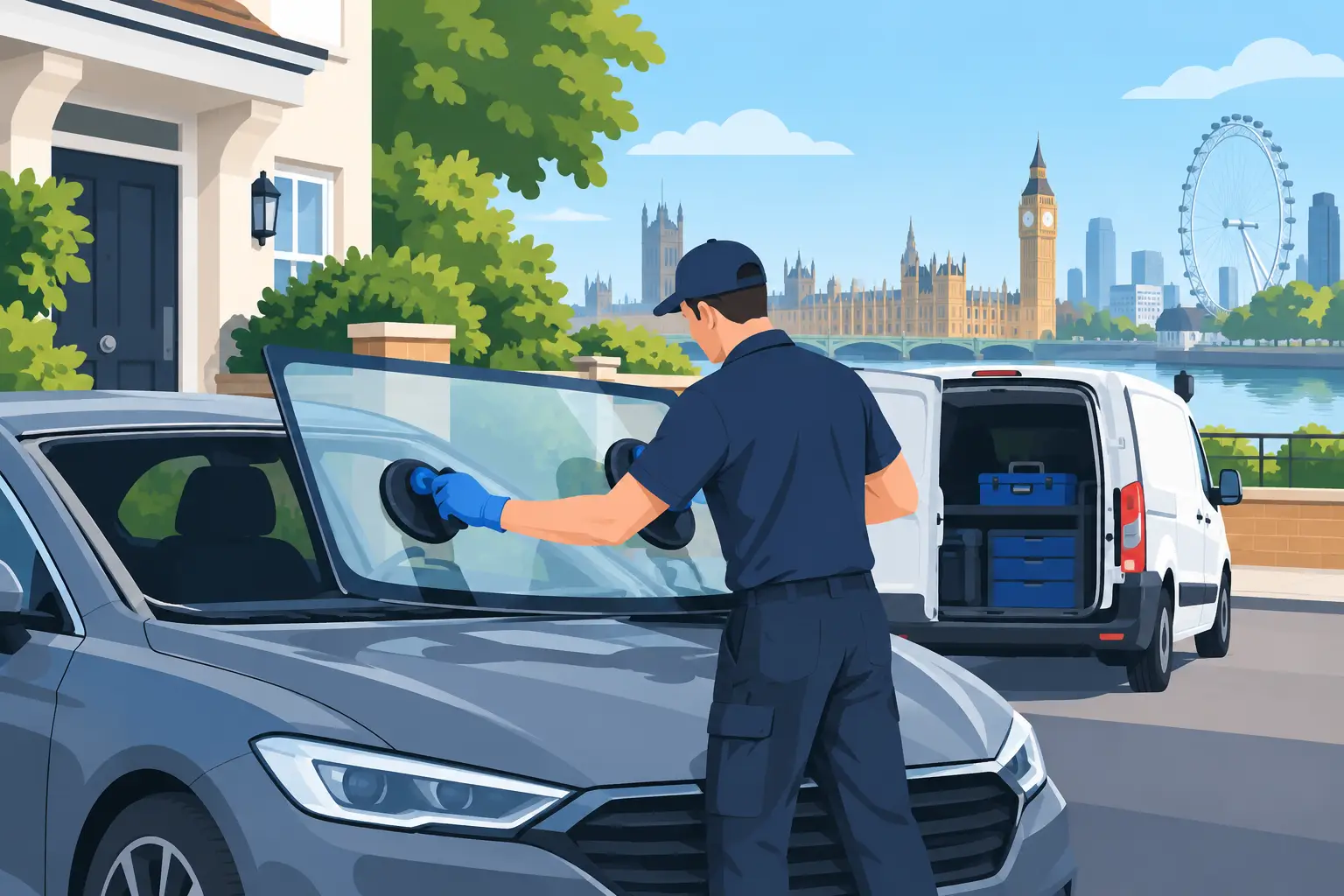
On arrival, the technician checks the vehicle and surrounding trim before removing the damaged windscreen or window. Broken glass is cleared carefully, the aperture is prepared properly and the new glass is installed using suitable automotive bonding materials. The job is not simply about putting a pane of glass in place. Correct preparation and fitting matter for weather sealing, visibility and the vehicle’s safety systems.
Once fitted, you will be advised when the vehicle is safe to drive. This can vary depending on the adhesive used, weather conditions and the specific vehicle, so it is worth following the technician’s instructions rather than rushing straight back onto the road.
Mobile service is particularly useful when the car will not safely pass a journey to a garage, when you are busy at work, or when a van needs to stay close to its tools and equipment. It is also a sensible option for customers dealing with vandalism outside their home.
Getting the right glass for your vehicle
Modern windscreens are not all the same. Some are simple replacement screens, while others include fittings for rain sensors, cameras, heating elements, aerials, heads-up displays or advanced driver assistance systems. The right replacement must match the vehicle specification, not just its shape.
This is why accurate vehicle details are useful at the quotation stage. A windscreen for one trim level may differ from another version of the same model. Professional fitters check details such as sensor brackets, tint bands and camera positions before ordering or bringing the glass.
For vehicles with forward-facing cameras and driver assistance features, calibration may be needed after windscreen replacement. Systems that assist with lane position, braking or road-sign recognition rely on accurate camera alignment. Ask about this before the job is booked, especially if your vehicle has a camera mounted near the rear-view mirror.
Quality standard glass and proper fitting materials are worth choosing. A poorly fitted screen can lead to wind noise, water leaks, trim damage and avoidable safety concerns. The aim is a clean, secure installation that suits the vehicle as it should.
Side, rear and tailgate glass
Side and rear windows need the same careful approach, even though the damage can look more obvious than a cracked windscreen. Tempered glass often shatters into many small pieces, which means proper clean-up is a major part of the job. Glass can work its way into door cavities, seat runners, rubber seals and carpets if it is not removed properly.
Rear windscreens and tailgate glass may include heating elements, aerial connections or spoiler fittings. Replacing them correctly means checking those details before fitting, then making sure the vehicle is left tidy and usable afterwards.
Vans, commercial vehicles and busy working days
West London has no shortage of working vans, delivery vehicles and trade fleets. A broken windscreen or side window on a Ford Transit, Mercedes Sprinter, Volkswagen Crafter, Citroën Relay, Peugeot Boxer or Fiat Ducato can affect a full day’s work. Commercial glass fitting needs to be organised around the reality that the vehicle earns its keep.
A mobile technician can attend a depot, building site, customer address or driveway where access allows. This is useful for sole traders who cannot leave a vehicle at a workshop, as well as fleet managers trying to keep disruption under control. Lorry windscreens and glass for other commercial vehicles can also require a more specific assessment due to size, access and glass availability.
For trade customers, giving the registration, vehicle type and exact damaged panel at the first call helps avoid delays. Mention any racking, internal lining, external accessories or access restrictions that could affect the fitting.
Campervan and van conversion glass fitting
For a van being converted into a campervan, windows are not an afterthought. The position, opening style and quality of the installation affect light, ventilation, privacy and how the finished conversion feels to use.
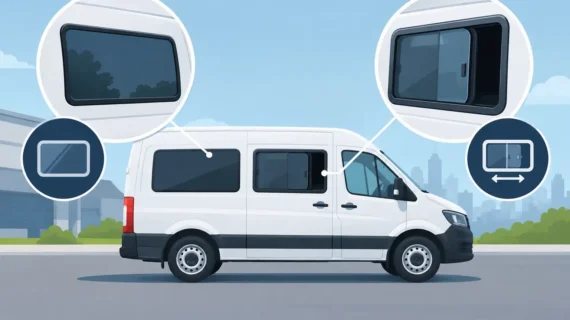
Fixed and opening side windows can be fitted to suitable vans, including popular conversion bases such as the Sprinter, Transit, Transit Custom, Crafter, Relay, Boxer and Ducato. Opening windows are useful around the sleeping and kitchen areas where airflow matters. Fixed privacy glass can suit other sections where you want daylight without needing an opening panel.
The work must be planned carefully. Glass placement should take account of internal furniture, structural areas, insulation and the intended layout. A conversion may also include skylights, solar panels and interior or exterior finishing work, so it makes sense to consider the whole build rather than treating each job separately.
What affects the cost and timing?
The right quote depends on the vehicle and the glass, not just the visible size of the damage. A basic front windscreen will be priced differently from a heated rear screen, an acoustic screen, a camera-equipped screen or a rare commercial-vehicle panel. Availability also matters. Some common glass can be sourced quickly, while specialist or imported vehicle glass may need ordering.
Access can affect timing too. A vehicle parked in a tight underground bay, behind locked gates or on a busy roadside may need a different arrangement. The safest approach is to explain where the vehicle is and send photos if requested. That allows the technician to arrive prepared.
Be wary of a quote that sounds vague or ignores the vehicle specification. A useful quote should make clear what glass is being fitted, whether trims or mouldings are included, and whether any sensor or camera work needs attention.
Preparing for your fitting appointment
You do not need to do much, but a little preparation helps the job go smoothly. Make sure the vehicle is accessible, remove loose items from the dashboard or seats, and let the fitter know about alarms, locking issues or aftermarket accessories near the glass. For a smashed side window, avoid clearing sharp glass yourself unless it is safe to do so.
After the work, keep doors and windows closed firmly but gently for the advised period. Avoid high-pressure car washes until the bonding and seals have had time to settle. If you notice a concern such as unusual wind noise or a trim issue, report it promptly so it can be checked.
When vehicle glass is damaged, the priority is not just replacing it quickly. It is getting the correct glass fitted properly, at a time and place that gets you moving again. Car Glass Service provides a direct, local option for drivers, van owners and trade customers across West London who need clear advice and professional fitting without unnecessary delay.