Can Cracked Glass Pass MOT? UK Test Rules
A hairline crack can look minor from the driver’s seat, but it may be enough to turn an MOT into a fail. So, can cracked glass pass MOT? Sometimes, yes – but only where the damage is small, outside the driver’s critical view and does not affect the safety or condition of the glass.
For most drivers, the real question is whether it is worth taking the chance. A windscreen crack can spread quickly with a pothole, a cold morning, demisting heat or a change in temperature. If the damage is close to the driver’s line of sight, replacement before the test is normally the sensible option.
Can cracked glass pass MOT under UK rules?
The MOT tester checks the windscreen as part of the driver’s view of the road. They are looking for damage that could obstruct that view, including cracks, chips, scratches and other marks.
The key area is known as Zone A. This is a vertical strip 290mm wide, centred on the steering wheel. It is the area directly in front of the driver where clear vision matters most. If windscreen damage in Zone A is more than 10mm across, it will normally cause an MOT failure.
Outside Zone A, but still within the area swept by the windscreen wipers, damage may be allowed up to 40mm across. Anything larger is likely to fail. These measurements apply to the size of the damaged area, not simply the visible length of one line in a crack. A spreading crack, star break or damaged section with several lines can be larger than it first appears.
There is a further practical point: an MOT tester assesses what they can see at the time. If a crack affects the driver’s view, creates distortion, or makes the windscreen unsafe, it can fail even if you believe it sits close to a size limit.
Where the crack is matters as much as its size
A small crack low down on the passenger side is very different from a crack running across the steering wheel area. The same is true of damage tucked near the edge of the windscreen compared with damage in the middle of the glass.
Cracks near an edge deserve attention even when they are outside the main wiped area. The edge supports the windscreen structure, and damage there is more likely to travel across the glass. On modern vehicles, the windscreen also contributes to body strength and supports safety systems. It is not just a screen keeping rain and wind out.
If your vehicle has a camera or sensor behind the windscreen for lane assistance, automatic emergency braking, traffic-sign recognition or automatic wipers, correct fitting matters too. A replacement may require camera calibration so the system continues to work as intended.
Zone A: the strictest part of the windscreen
Zone A is where MOT failures are most common. A crack or chip over 10mm here can be enough for a fail, even if it does not seem particularly distracting on a short journey.
Do not rely on moving your seat or steering wheel position before the test. The inspection is based on the driver’s normal forward view and the position of the steering wheel. If the damage is in that central strip, arrange for the glass to be assessed before booking the MOT rather than hoping it will be accepted.
Outside Zone A: not automatically safe
Damage outside Zone A can still fail if it exceeds 40mm in the swept area. It can also become a problem if it is badly cracked, creates sharp edges, causes visible distortion or affects other parts of the vehicle’s safety equipment.
This is why a windscreen that technically looks borderline is rarely worth ignoring. MOT standards set the minimum legal test level. They are not a recommendation to keep driving with weakened glass until the last possible moment.
What about cracked side windows and rear glass?
Cracked side windows and rear windscreens are judged differently from the front windscreen, but they should not be dismissed. The tester will consider whether the glass is secure, whether it presents a risk of injury, and whether it affects the driver’s view through required mirrors or windows.
A cracked front side window can be particularly troublesome because it is close to the driver and may affect visibility at junctions, roundabouts and when checking mirrors. Tempered side glass can also shatter without much warning once it has been damaged. If the window has broken, keeping rain, loose glass and vehicle security under control is another immediate concern.
Rear glass matters for safe observation too. A damaged rear windscreen may affect your view in the mirror, and broken heating elements can leave the screen misted on damp mornings. For vans and commercial vehicles, the exact arrangement of mirrors and rear windows varies, but any loose, sharp or unsafe glass needs sorting properly.
A crack may pass the MOT, but can you legally drive with it?
An MOT pass is not a permanent approval for a damaged windscreen. You are still responsible for making sure the vehicle is roadworthy every time you drive it. If a crack develops after the MOT, spreads into your line of sight or becomes dangerous, it needs attention regardless of when the certificate expires.
There is also the risk of a roadside stop. If the damage seriously affects your view of the road, it could be treated as a roadworthiness issue. More importantly, unclear vision leaves less time to spot pedestrians, cyclists, brake lights and hazards in London traffic.
Insurance can be another factor. Some policies include windscreen cover, often with a separate excess, but the cover and conditions vary. Check your policy before authorising work if you plan to claim. If speed matters more than making a claim, get a clear quote for the replacement and choose a fitting time that gets the vehicle safely back into use.
Do not wait for a crack to spread
A cracked windscreen cannot be relied upon to stay the same size. Temperature changes make glass expand and contract. Slamming a door, driving over rough roads, using a heated screen, or simply parking in direct sun can make the crack travel.
Once a crack has spread into Zone A, the choice becomes more urgent and the MOT result less uncertain. Covering it with tape or trying to hide it does not make it safe and will not solve the inspection issue.
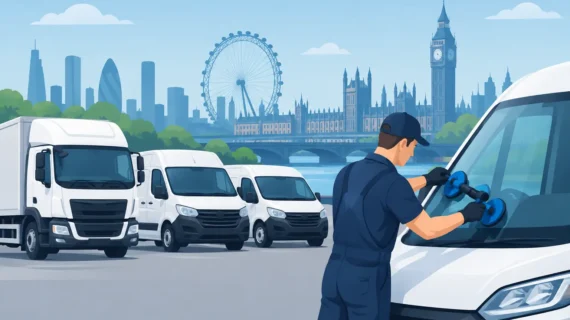
At Car Glass Service, cracked windscreens are replaced rather than repaired. A technician can come to your home, workplace or another suitable location across West London, helping private drivers, tradespeople and fleet operators avoid unnecessary downtime. The correct glass and professional fitting are especially important on vans, commercial vehicles and cars with windscreen-mounted cameras or sensors.
What to do before your MOT
Check the windscreen in daylight and look from both inside and outside the vehicle. Clean the glass first, as dirt can make the damage difficult to judge. Then consider where the crack sits in relation to the steering wheel and the swept area of the wipers.
If it is in front of the driver, larger than a small coin, spreading from the edge, or causing glare and distortion, arrange replacement before the test. The same applies if there are multiple damaged points close together. A proper assessment is better than paying for an MOT only to be told the vehicle has failed on an issue you already knew about.
Also make sure the wipers clear the screen properly and washer fluid is topped up. A clear windscreen is only useful if you can keep it clear in wet or dirty conditions.
A borderline crack might pass, but safe visibility should be the deciding factor. Sorting damaged glass before your MOT gives you one less thing to worry about and helps keep every journey clearer, safer and less likely to be interrupted by an avoidable failure.