Rear Door Glass Replacement Guide for Drivers
A smashed rear door window leaves more than an obvious security problem. Loose glass can sit inside the door, on the rear seat and around the window mechanism, while rain, road dirt and cold air are suddenly getting into the vehicle. This rear door glass replacement guide explains what to do first, when replacement is needed and what a proper professional fitting should involve.
Rear door glass usually means the opening side window in the rear passenger door, not the rear windscreen. The job may look simple from outside, but modern doors contain window regulators, wiring, weather seals and, on some vehicles, side-impact safety equipment. Getting the glass in place is only part of the work. It must raise, lower and seal correctly afterwards.
When rear door glass needs replacement
Replacement is normally the right answer when the pane has shattered, has a hole, or has a long crack that reaches the edge of the glass. Tempered side-window glass is designed to break into small pieces rather than dangerous sharp shards. That improves safety in an impact, but it also means a smashed window cannot be put back together.
A crack in rear door glass can also worsen quickly with road vibration, a slammed door or a change in temperature. Even if the pane is still sitting in the frame, it may no longer be secure. Do not assume a small crack is only cosmetic, especially if it is close to the bottom edge where the glass sits in the regulator channel.
There are a few less obvious signs that should be checked by a glazing specialist. If the glass drops into the door, moves slowly, sits at an angle, rattles, or will not close fully, the issue may involve the regulator or its clips as well as the glass. Replacing the pane without checking the mechanism can lead to another failure soon after.
What to do straight after a rear door window breaks
Keep people away from the damaged door, particularly children and pets. Broken toughened glass is less likely to cause deep cuts than ordinary glass, but the small pieces are still sharp and can work their way into seats, carpet and clothing.
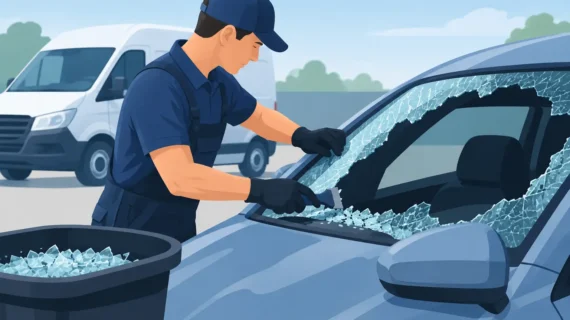
If it is safe, remove larger loose pieces from the seat and door frame with gloves. Avoid pushing anything down into the window channel. There may be glass inside the door skin, and forcing it further down can interfere with the regulator or scratch internal parts.
Covering the opening temporarily can keep out rain and reduce drafts, but it is not a repair. Use a clean plastic sheet secured around the painted frame, not directly onto broken glass edges. Do not block the driver’s view, and do not rely on a loose cover for motorway driving. If the vehicle has been broken into, check the interior carefully before moving it, as glass often spreads much further than expected.
For urgent damage at home, work or by the roadside, an on-site fitting service can save the risk and inconvenience of driving with an exposed window. A clear photo of the damaged door, the vehicle registration and its make, model and year will help a technician identify the correct glass before attending.
Rear door glass replacement guide: what happens during fitting
A professional rear door glass replacement starts with confirming the exact vehicle and glass specification. Rear door panes differ by body style, number of doors, tint, heating elements, antenna connections and factory privacy glass. Two vehicles that look nearly identical can use different glass.
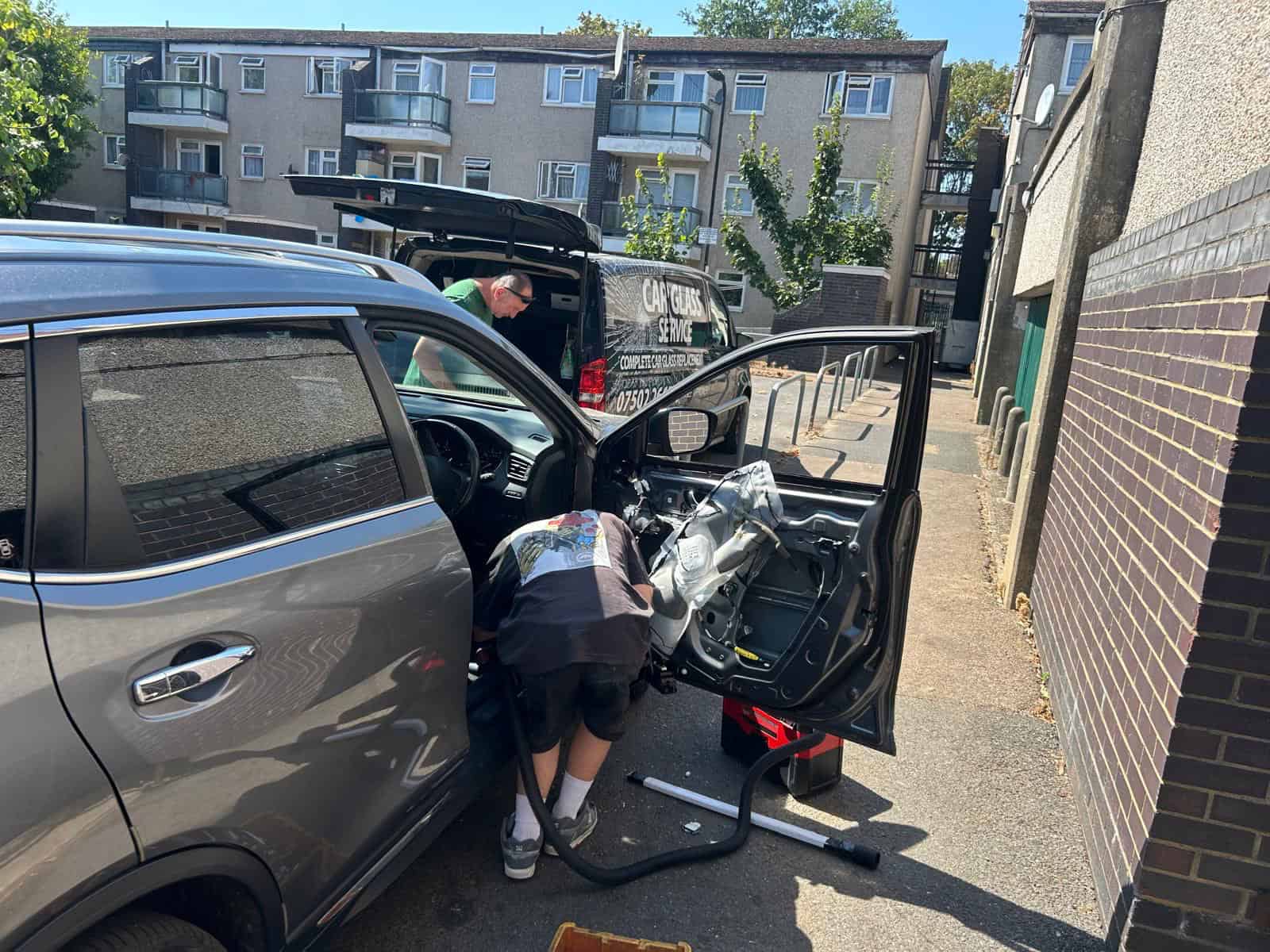
The technician will first clear the visible broken glass and protect the vehicle’s paintwork and interior. The door trim panel is then removed carefully to access the window regulator and fixing points. This is where experience matters. Door cards can contain clips, electrical connectors, speakers, switches and trim pieces that should not be forced.
Any glass fragments inside the door are removed before the new pane is fitted. Leaving fragments behind can cause rattles, block drain holes or damage the regulator over time. The glass is positioned in the regulator channel, secured with the correct fittings and moved through its full travel to make sure it does not bind.
The final checks are practical ones. The window should open and close smoothly, sit level at the top, meet the weather seal properly and avoid catching the trim. The technician should also clear the cabin, door pockets and seals of remaining glass. A good fitting is quiet, watertight and does not leave you with a window that only works when it feels like it.
Choosing the right replacement glass
The correct glass should match the vehicle’s intended specification as closely as possible. OEM-standard glass and materials are made to the right size, curvature and safety standard for the application. That matters for the fit around seals and for how the window operates inside the door.
Tint is one area where drivers should ask questions before fitting. Standard green-tinted glass, privacy glass and aftermarket tint film are not the same thing. A replacement that does not match the remaining windows can be noticeable, particularly on SUVs, people carriers and executive vehicles. If your original rear door window was darkened from the factory, make that clear when requesting a quote.
On many passenger cars, rear door glass has no electrical connections. However, some models may have antenna components, laminated acoustic glass or other vehicle-specific features. Vans and converted campervans can bring additional considerations too, especially where fixed side windows, opening windows or privacy glass have been fitted as part of a conversion.
What affects the cost and timing
The price of rear door glass replacement depends on the vehicle, glass type and the damage around it. A common hatchback window with standard tint is generally more straightforward than specialist glass for a luxury SUV, imported model or commercial vehicle. Availability also affects timing. Some panes can be sourced quickly, while less common specifications may need to be ordered.
The condition of the door mechanism matters as well. If a break-in has bent the window frame, damaged the regulator, torn the seal or broken trim clips, these issues should be dealt with at the same time. It can be tempting to fit the pane and leave the rest, but a weak regulator or damaged seal may compromise the new glass.
Insurance cover may help where the damage is caused by vandalism, theft or an accident. Check whether your policy has separate vehicle-glass cover, what excess applies and whether you can choose your own repairer. For many drivers, paying directly can be simpler when the claim value is low, but it depends on the policy and the full scope of damage.
Can you drive before the replacement?
It depends on the condition of the vehicle and the journey. A fully shattered rear door window leaves the interior exposed and can create a distraction from wind noise, rain and loose glass. If visibility is affected, there are loose fragments, or the door cannot be secured, do not drive it until it has been made safe.
A short, careful journey may be possible after the opening has been properly covered and the loose glass removed, but it is not ideal. Avoid high speeds, heavy rain and leaving the vehicle unattended. A broken side window is an open invitation for further theft, particularly if tools, equipment or personal items are visible inside.
For tradespeople and van operators, getting the vehicle secured quickly is often just as important as the glass itself. Tools, stock and paperwork should be removed or protected while you arrange fitting. A fast response reduces downtime and means the vehicle can return to work with the door properly sealed.
How to avoid problems after replacement
Once the new rear door glass is fitted, test it a few times before the technician leaves if possible. Listen for scraping or rattling, and check that the top edge sits evenly against the seal. If the window has an auto-up feature, it may need resetting after the battery has been disconnected or the switch panel has been removed. The technician can advise on the correct procedure for your vehicle.
Keep the window channel clean over the following days. Dirt trapped in the rubber guides can mark the glass and make the regulator work harder. If you notice water entering the door, unusual wind noise or a window that is slowing down, arrange a check promptly rather than forcing the switch.
Car Glass Service provides rear door and side-window replacement across West London for private vehicles, vans and commercial operators. The focus is simple: correct glass, careful clean-up, professional fitting and a clear quote before work starts.
A broken rear door window is stressful, but it does not need to keep your vehicle off the road for long. Secure the car, avoid handling hidden glass, and arrange a proper inspection so the replacement pane, regulator and seals are all working as they should.