A Guide to Commercial Vehicle Glass Replacement
A broken windscreen or smashed van window can stop a working day before it starts. This guide to commercial vehicle glass replacement explains what happens next, how to protect the vehicle and load, and how to get your van, lorry or fleet vehicle safely back into service with as little disruption as possible.
For tradespeople, delivery drivers and fleet operators, vehicle glass is not a cosmetic extra. It affects visibility, security, weather protection and, on many newer vehicles, the safe operation of cameras and driver-assistance systems. The right response depends on the type of damage, where it is located and how soon the vehicle needs to be back on the road.
When commercial vehicle glass needs replacing
Replacement is normally required when glass has shattered, a windscreen crack has spread, damage sits in the driver’s main viewing area, or the glass no longer provides safe structural support. A side window broken during a theft or vandalism incident also needs prompt attention. Apart from the obvious security risk, exposed glass and debris can make the cab unsafe for the driver and passengers.
A small stone impact may sometimes be suitable for a targeted repair, particularly when it is caught early and is away from the driver’s direct line of sight. However, the decision should be made after an inspection. Size alone does not tell the full story. The depth of the damage, the edge of the windscreen, contamination and the vehicle’s glass specification all matter.
Do not keep using a vehicle with loose glass, a badly obscured windscreen or shattered side glass. Secure the vehicle, avoid touching sharp fragments and arrange professional help. If the vehicle carries tools, stock or personal data, remove or protect what you can while waiting for the fitter.
A guide to commercial vehicle glass replacement: what to expect
A proper replacement begins with identifying the exact vehicle and glass required. Commercial vehicles come in far more variations than many people expect. The same van model may have different windscreen shades, rain sensors, heated elements, aerials, camera mounts or mouldings depending on its year and trim level. Rear doors, sliding doors and fixed body windows can also differ between wheelbases and conversion layouts.
A professional glass specialist will usually ask for the registration number, vehicle make and model, the damaged glass location, and clear photographs where possible. This helps confirm availability and prevents wasted time on the day. For fleet vehicles, it is useful to provide a fleet or asset number and a contact who can approve the work quickly.
Once the correct glass is confirmed, the technician removes the damaged unit carefully, clears loose fragments and prepares the aperture. The frame must be checked for damage, corrosion or leftover adhesive before the new glass is fitted. Skipping this preparation can lead to poor bonding, water ingress, wind noise or an uneven finish.
The replacement glass is then installed using suitable OEM-standard materials. The vehicle must remain stationary for the recommended curing period before it is driven. This is not a delay for the sake of it. Adhesive needs time to achieve the strength required for safe use, especially where the windscreen contributes to the body structure.
Side and rear window replacement
Side and rear glass work has its own challenges. When toughened glass breaks, it often scatters across the seats, door cards, floor, storage compartments and load area. A thorough clean-up matters as much as the new pane. Tiny pieces left behind can cause injuries, damage equipment or create an ongoing nuisance for the driver.
The door mechanism, seals and window regulator should also be inspected. A smashed side window can hide damage to trim, guide channels or locking components. On vans, rear windows and door glass need secure fitting and correct sealing to keep out rain and reduce road noise.
Keep downtime under control
The best way to reduce downtime is to act before a manageable issue turns into an urgent one. Drivers should report chips, cracks, leaks and loose trims as soon as they notice them. A simple fleet reporting process – with photos, vehicle details and current location – makes it easier to arrange the right work first time.
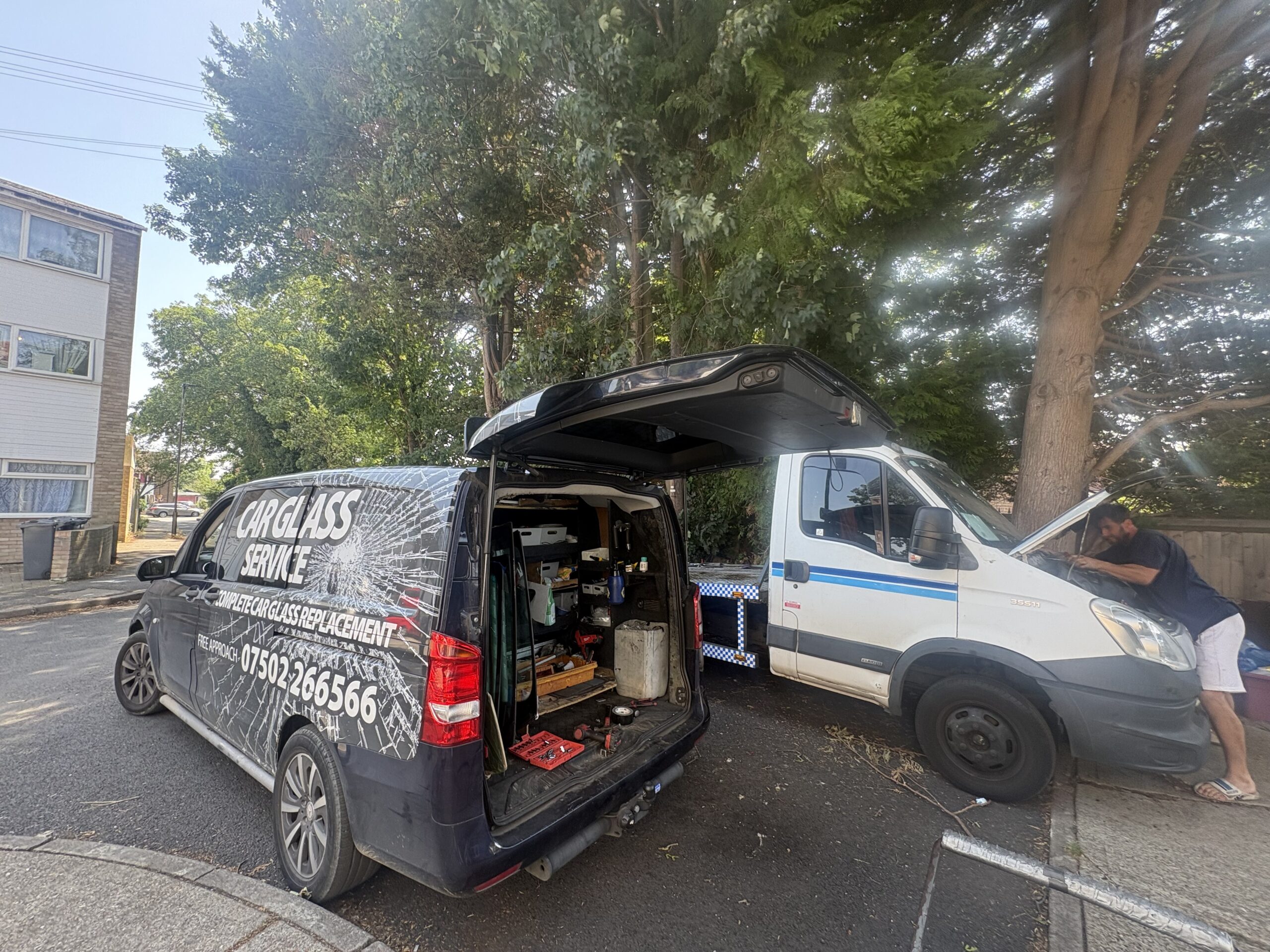
For an urgent breakage, mobile fitting can be the practical option. Instead of taking a disabled van to a workshop, the technician can attend the depot, home address or safe work location. This is particularly useful for sole traders who cannot afford to lose half a day travelling across London, and for fleets with several vehicles to manage.
Mobile work does have limits. The vehicle needs enough safe space around it, reasonable access and conditions suitable for precise fitting. Heavy rain, high winds, poor lighting or an unsafe roadside position may mean moving the vehicle to a better location. A reliable fitter will explain this clearly rather than rushing a job that needs controlled conditions.
If you run multiple vehicles, keep a record of each vehicle’s registration, glass specification and any camera or sensor equipment. It is also sensible to know who is authorised to approve work outside office hours. These small operational details can save valuable time when a driver calls with a damaged window at the start of a shift.
Cameras, sensors and calibration checks
Many modern commercial vehicles have windscreen-mounted cameras, rain sensors, lane-support features or automatic emergency braking systems. Replacing the glass may involve transferring or refitting components correctly and, in some cases, carrying out a calibration procedure afterwards.
This is one area where fitting the right glass is only part of the job. If a forward-facing camera is not positioned and calibrated as required, driver-assistance features may not operate as intended. Tell the glass specialist about dashboard warnings, camera equipment and any recent body repairs. If calibration is required, it should be discussed before the booking so there is a clear plan for completing the work.
Not every commercial vehicle has these systems, and not every windscreen replacement needs the same process. Older vans may be straightforward, while a newer panel van with a camera package needs more checks. The sensible approach is to match the work to the vehicle rather than assuming every replacement is identical.
Choosing the right glass service
Price matters, but the quote should cover more than the pane of glass. Ask what is included: the glass specification, mouldings or clips where needed, removal of broken glass, fitting materials, call-out arrangements and any camera-related work. A clear quote makes it easier to compare like for like.
You should also expect the fitter to check the vehicle before and after the job, protect paintwork and interior trim, and leave the area clean. For commercial operators, punctuality and communication matter too. If a part has to be ordered, knowing that early lets you reassign work, notify customers or use a spare vehicle.
Car Glass Service provides mobile commercial vehicle glass work across West London, helping van owners, tradespeople and fleet operators deal with windscreen, side and rear glass damage at their location. The focus is on correct glass, professional fitting and a practical route back to work.
What drivers should do before help arrives
If a window has been smashed, park somewhere secure if possible and keep people away from loose fragments. Covering an opening temporarily may help protect the interior from weather, but do not tape directly over damaged edges in a way that creates more risk or leaves adhesive on paintwork. Take photographs for your records before clearing anything significant.
For windscreen damage, avoid sudden temperature changes. Do not pour hot water over cold glass or direct a heater aggressively at the affected area, as this can encourage a crack to spread. Keep the damaged area clean and avoid pressing on it.
Have the registration, vehicle location and a photo of the damage ready when requesting a quote. If you have a fleet vehicle, mention whether it has a camera behind the windscreen and whether it is needed for a booked job that day. Accurate information allows the fitter to bring the right glass and materials.
A commercial vehicle earns its keep by moving, carrying and turning up when promised. Arrange glass work promptly, choose a service that understands working vehicles, and give the replacement the time and checks it needs before the next job.