Windscreen Chip MOT Rules and Failure Limits
A small mark in the windscreen can look harmless from the driver’s seat, especially when the vehicle is still driving normally. But windscreen chip MOT rules are based on where the damage sits and how large it is – not simply whether you can live with it for another week. A chip in the wrong place can turn a routine MOT into a fail, hold up work, and become a bigger safety issue as temperatures and road vibration take their toll.
For drivers, tradespeople and fleet operators, the sensible approach is to check windscreen damage early. You do not want to discover a fail on MOT day when the van is booked for work or the car is needed for the school run.
Windscreen chip MOT rules: the limits that matter
During an MOT, the tester checks the windscreen for damage that could obstruct the driver’s view. Chips, scratches, stars, bullseyes and cracks are all assessed as windscreen damage. The key areas are the driver’s primary viewing area, known as Zone A, and the rest of the swept area covered by the windscreen wipers.
Zone A is a vertical strip 290mm wide, centred on the steering wheel. It is the section directly in front of the driver where clear vision matters most. If a chip, crack or other piece of damage in Zone A is more than 10mm across, the vehicle will fail the MOT.
Outside Zone A but still within the area swept by the wipers, the maximum permitted size is 40mm. Damage larger than 40mm in this wider swept area is a fail.
These measurements apply to the damaged area itself. A small surface mark may look minor, but a star-shaped chip can spread further than expected. Likewise, a crack that starts outside the driver’s direct view may travel into Zone A. That is why a quick visual check is not always enough.
Where is Zone A on your windscreen?
Zone A is not simply the whole area in front of the driver. It is a narrower central band, measured 290mm across, running through the windscreen in line with the steering wheel. On a right-hand-drive vehicle, it will be positioned in front of the right-hand seat.
This is where MOT rules are strictest. A 12mm chip on the passenger side may be within the allowable size if it is in the swept area but outside Zone A. The same 12mm chip in front of the driver is an MOT failure.
The rest of the wiper-swept area is still checked carefully. Damage there can affect visibility in rain, low sun or night driving, even when it does not technically sit in Zone A. A tester may also identify other problems, such as badly worn wiper blades, a loose windscreen, or damage that creates a sharp edge.
A chip can fail even if it is not a crack
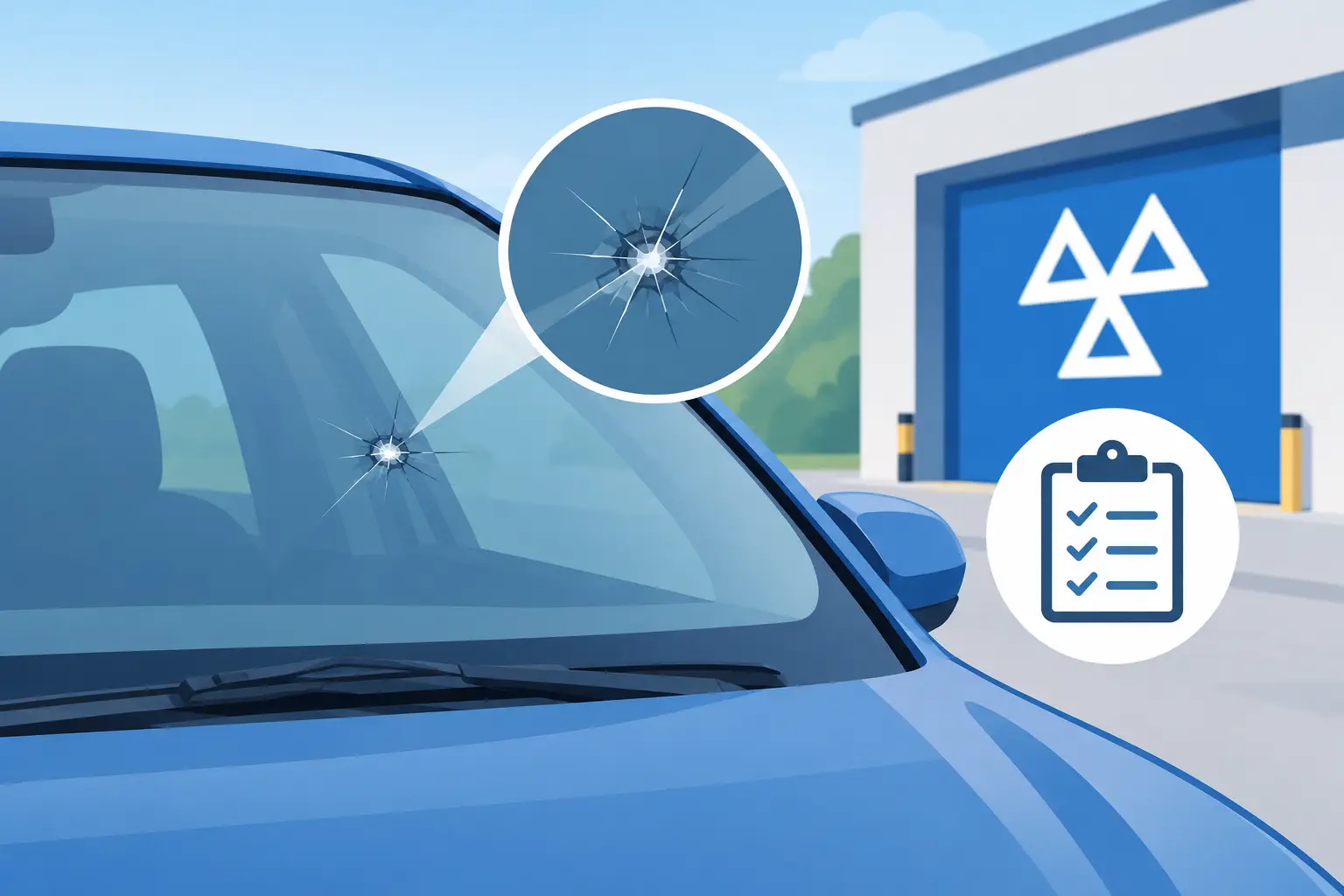
Many motorists assume that only a long crack causes an MOT problem. That is not the case. The MOT test considers a chip as damage, and the same size limits apply. A stone impact can create a small central pit with radiating lines, which may be wider than it first appears.
A chip can also deteriorate without warning. Road vibration, potholes, door slams, frost, demister heat and sudden temperature changes can cause the damaged area to spread. Once there is a crack, replacement is normally the safe option. A cracked windscreen should not be treated as something that can simply be repaired and forgotten.
If your MOT is due soon, do not wait to see whether the damage gets worse. Take a clear photo with a ruler or coin nearby for scale, but remember that only a proper inspection can confirm its position and full extent.
What if the damage is outside the wiper-swept area?
Damage outside the swept area will not usually fail solely under the windscreen damage size limits. However, that does not automatically mean it is safe to ignore. A crack near the edge of the glass can weaken the windscreen, and edge damage is more likely to spread across it.
Modern windscreens also do more than keep rain and wind out. They contribute to the strength of the vehicle body and support the passenger airbag system in many cars and vans. On vehicles with camera-based driver assistance systems, the windscreen may also carry equipment for lane support, emergency braking or road-sign recognition.
For these reasons, the best decision is not always based only on passing an MOT. If you have a crack, damage close to the edge, or impaired vision when driving into sunlight, arrange an assessment before it becomes an urgent replacement.
Other windscreen faults that can affect an MOT
A clean, undamaged screen is only part of the MOT picture. The tester also needs a clear view through the windscreen and working equipment to keep it clear in normal driving conditions. Problems that can cause trouble include defective wipers, washers that do not provide enough fluid, a faulty demister, badly damaged wiper-swept glass, or stickers and objects that seriously obstruct the driver’s view.
A faded permit sticker in an upper corner is unlikely to be the same issue as a large obstruction in front of the driver. It depends on where it is and whether it blocks the view of the road. Sat-nav mounts, phone holders and dashboard items should be placed carefully for the same reason.
For vans and commercial vehicles, check the windscreen before a booked test rather than relying on the driver’s daily walk-around. A vehicle that spends long hours on motorways, building sites or urban delivery routes is exposed to more debris and vibration. One damaged screen can mean a missed job, a delayed delivery or an off-road vehicle when you can least afford it.
What to do before your MOT
If the damage is clearly larger than the permitted limit, sits in Zone A, or has become a crack, arrange replacement before the MOT. Waiting until after a fail is rarely convenient, particularly if you need the vehicle for work. You can also avoid uncertainty by getting the glass checked ahead of time.
Do not cover a chip with tape or a sticker in an attempt to hide it. It will not solve the visibility issue, and it may make the area harder to assess. Keep the windscreen clean, make sure the washer bottle is topped up, and replace worn blades that smear water across the glass. These simple checks give the tester a proper view of the screen and help you drive safely in the meantime.
If your vehicle has windscreen-mounted cameras or sensors, ask whether calibration is needed after a replacement. This is particularly relevant for newer cars, SUVs and vans with advanced driver-assistance features. Correct fitting is about more than installing a new piece of glass.
When a prompt replacement makes sense
There are cases where it is better not to judge the job by the MOT measurement alone. A crack in the driver’s line of sight, a crack travelling from the edge, shattered laminated glass, or a damaged screen following an attempted break-in should be dealt with promptly. The same applies if water is getting into the vehicle or the glass is affecting camera visibility.
Car Glass Service provides windscreen replacement for cars, vans and commercial vehicles across West London, with fitting arranged at your home, workplace or another suitable location. For a clear quote, have your registration, vehicle model, windscreen features and a photo of the damage ready when you call.
The practical rule is simple: if you can see the damage while driving, if it is close to the driver’s direct view, or if it has begun to spread, deal with it before MOT day turns a small issue into lost time.