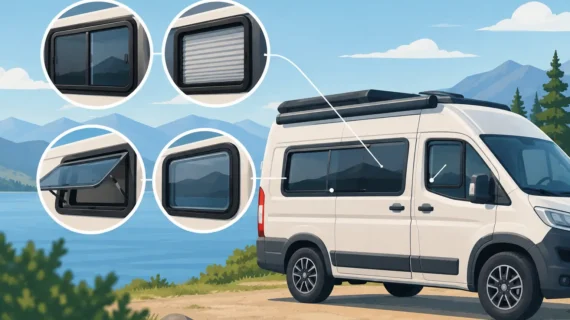
Best Privacy Glass for Campers: What Works?
A campervan should feel private when you park up for the night, but it must still be bright, safe and practical on the road. The best privacy glass for campers is usually professionally fitted, dark-tinted safety glass in the side and rear of the van, selected around how you use the vehicle rather than simply choosing the darkest option available.
For most conversions, privacy glass gives a cleaner result than curtains alone. It stops people seeing straight into the living area during the day, reduces glare and gives the van a more finished appearance. But glass choice affects ventilation, visibility, insulation plans and where you can fit furniture, so it pays to get the layout right before any holes are cut.
What is the best privacy glass for campers?
There is no single pane that suits every camper. For a weekend surf van, fixed dark-tinted side windows may be all that is needed. For a family camper used for longer trips, a mix of fixed privacy glass and opening windows is often the better answer. You gain daylight and airflow without leaving the whole interior on show.
The strongest all-round choice is E-marked, toughened privacy glass designed for automotive use. It is made for vehicle installation, has a consistent factory tint and is suitable for the movement, vibration and changing temperatures a van sees every day. This is very different from adding a dark film to ordinary glass or trying to use domestic glazing in a vehicle conversion.
A medium-to-dark factory tint is normally the sensible balance. It gives meaningful privacy from the outside while still allowing enough light inside to make the camper pleasant during the day. Very dark glass can look smart, but it may make the interior feel gloomy on overcast days and can reduce visibility when reversing or manoeuvring at night.
Factory privacy glass versus tinted film
Factory-tinted privacy glass has the tint within the glass itself. It does not bubble, peel or fade in the way a poor-quality film can. It is also easier to clean and gives an even finish across each window, which matters on a well-presented campervan conversion.
Tint film can be useful where a van already has clear rear glazing and the owner wants more privacy without replacing the glass. The quality of the film and fitting makes a major difference, though. Edges, heater lines and curved glass can all make a film installation more difficult. Film also does not turn unsuitable glass into safety glass.
For new side-window installations, fitted privacy glass is usually the longer-lasting and neater option. It also lets you choose the proper window type from the start, whether that is a fixed bonded pane or an opening unit with an integrated flyscreen and blind.
Fixed windows suit a clean, simple layout
Fixed privacy windows are a good option for vans where ventilation will come from a rooflight, cab windows or another opening window. They are generally less complicated than opening units and give a flush, factory-style look when properly bonded into the panel.
They work particularly well beside a rear lounge, kitchen area or bed where light is useful but an opening mechanism is not essential. Fixed glass can also be the best choice where cupboards, units or a bed frame would obstruct an opening window.
Opening privacy windows are better for sleeping areas
An opening side window earns its place beside a bed or seating area. Fresh air makes a real difference on warm nights and when cooking inside the van. Choose a window that can be left slightly open securely, and consider a built-in flyscreen if you regularly stay in rural or coastal areas.
The trade-off is cost and complexity. Opening windows have frames, catches and seals that need correct fitting and occasional checks. They may also sit less flush than a bonded fixed pane. That does not make them a poorer choice – it simply means they should be fitted where the extra ventilation is genuinely useful.
Choose glass around your van and interior plan
Privacy glass should be selected before the interior build is finalised. Window positions affect wall insulation, overhead lockers, kitchen units and bed layouts. A window placed too low can be blocked by furniture. One placed too high may not give the view or ventilation you expected when seated inside.
This matters on every van, from a Ford Transit Custom day van to a long-wheelbase Mercedes Sprinter, VW Crafter, Ford Transit, Citroen Relay, Peugeot Boxer or Fiat Ducato. Panel shapes and available window sizes differ, and the best arrangement for one model does not automatically work on another.
Think about where people will sit, sleep and cook. A rear-side privacy window can make a bed area feel less enclosed. A sliding-door window can bring useful light into the kitchen, but it needs careful consideration if the door will often be open. For a van with a large rear lounge, rear-door or tailgate glass may make the space feel far more open while maintaining daytime privacy.
Safety, legality and visibility matter
Use automotive glass that is approved for its intended position on the vehicle. Proper campervan conversion glass is manufactured and marked for vehicle use, and professional installation is essential. The cut edge of a van panel must be prepared correctly, protected against corrosion and bonded with the right materials. Poor preparation can lead to leaks, wind noise, rust or a window that does not sit correctly.
The rules are stricter for the windscreen and front side windows than for rear camper glazing. In the UK, the windscreen must allow at least 75% light through, while front side windows must allow at least 70%. Dark privacy glass is therefore normally used behind the driver rather than in the front doors.
Even where rear tint levels are less restricted, do not ignore visibility. If rear glass is very dark, good mirrors and, where appropriate, a reversing camera become more valuable. This is especially relevant on larger campers with limited rearward vision.
Do not rely on privacy glass alone at night
Privacy glass is highly effective in daylight, but it is not a full blackout system. Once lights are on inside after dark, people outside may still see shapes and movement. For overnight stops, pair privacy glass with insulated curtains, fitted blinds or thermal screens.
This combination has another benefit: better temperature control. Glass loses heat more quickly than an insulated van wall, so blinds and thermal covers help keep the living area warmer in colder weather and reduce solar gain in summer. They also reduce condensation on the glass first thing in the morning.
A practical setup is dark-tinted rear and side privacy glass for daytime discretion, then tailored blinds for sleeping. You keep the open feel of windows in the day without sacrificing privacy when parked overnight.
Questions to ask before fitting camper privacy glass
Before booking the job, confirm whether you need fixed or opening windows, where the furniture will sit and whether the van will have a rooflight. Ask what type of automotive glass is being supplied, how the cut edge will be protected and whether the window is designed for your exact vehicle panel.
It is also worth checking the planned tint against the rest of the conversion. Dark glass looks particularly good with black trim and a clean exterior finish, but a slightly lighter tint may suit a camper that needs maximum daylight. If you carry children, dogs or passengers in the rear, a lighter privacy option can make the space feel more comfortable without giving up all discretion.
For owners in West London converting a van into a usable camper, Car Glass Service can advise on fixed and opening side windows, rear glazing and practical placement before the build is closed up. A proper survey helps avoid expensive changes once insulation, lining and furniture are in place.
The right privacy glass should make your camper feel like your own space, not like a dark box on wheels. Choose safety glass that suits the van, put opening windows where fresh air will matter most, and keep blinds in the plan for nights away.